
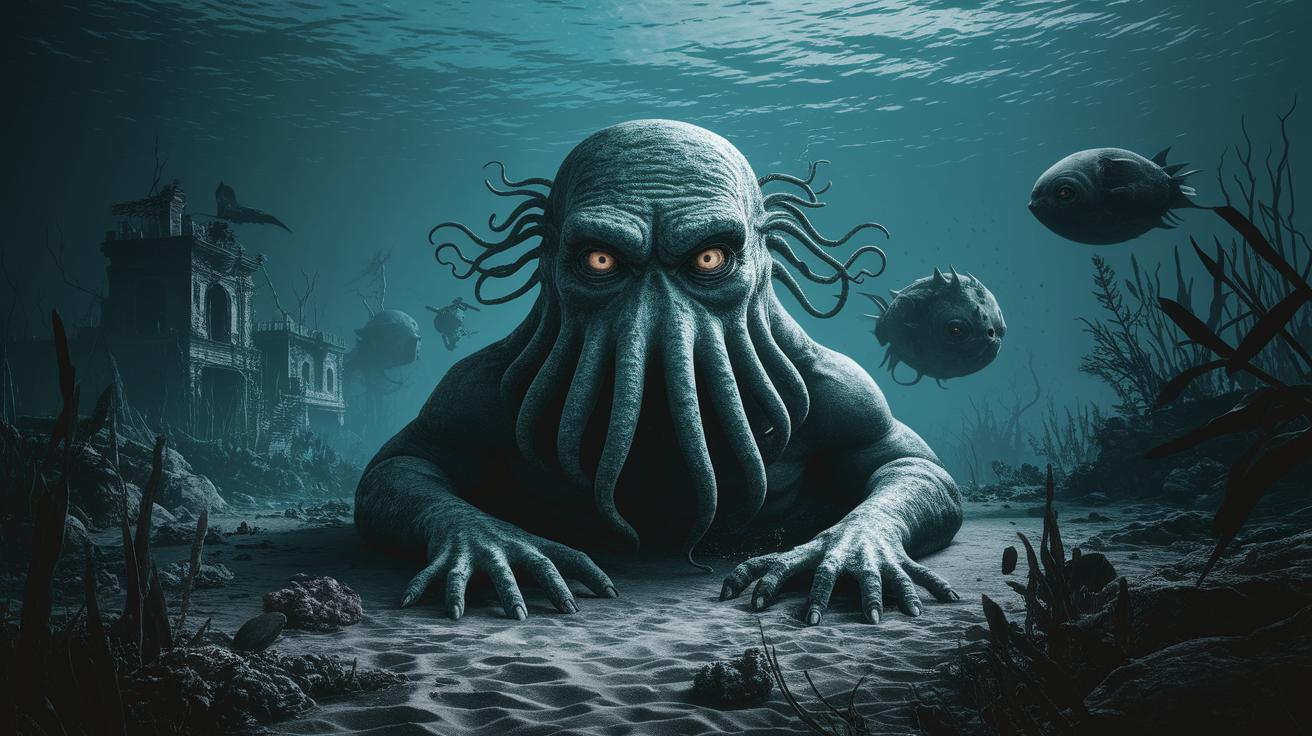
R’lyeh: The Sunken City Where Cthulhu Sleeps
The Cthulhu Mythos has fascinated readers for decades, unfurling a tapestry of cosmic horror that intertwines with both dread and curiosity. At the heart of this mythos lies R’lyeh, the enigmatic sunken city where the Great Old One, Cthulhu, lies in a deathless sleep beneath the Pacific Ocean. This blog post explores the influence of H.P. Lovecraft’s work on modern horror through various lenses. It highlights contemporary homage and critique in books such as “The Ballad of Black Tom,” considers the complexities of Lovecraft’s legacy, and navigates the cultural milestones in arts, business, and literature inspired by his creations. Whether you’re a neophyte to Lovecraftian lore or a seasoned devotee, this exploration offers insights into the undying allure of the mythos and its ever-evolving impact on modern storytelling.
‘The Ballad Of Black Tom’ Offers A Tribute To And Critique Of Lovecraft
Victor LaValle’s “The Ballad of Black Tom” serves as a poignant tribute and a nuanced critique of Lovecraftian lore. LaValle deftly acknowledges H.P. Lovecraft’s profound influence on the horror genre while addressing the problematic elements of his legacy, particularly his racism. By revisiting the themes of Lovecraft’s work, LaValle crafts a narrative that both pays homage to and interrogates the mythos created by the early 20th-century author.
Set against the backdrop of 1920s New York City, LaValle’s novel updates Lovecraft’s trope of cosmic insignificance and injects it with a perspective that critiques Lovecraft’s prejudices. The character-driven plot centers on Tommy Tester, a Black man navigating the racial tensions of Harlem. Through Tommy’s eyes, LaValle challenges the readers to confront uncomfortable truths about Lovecraft’s worldview, while still basking in the grotesque allure of cosmic horror.
Share this:
We invite readers to share their thoughts and perspectives on how modern reinterpretations of Lovecraft’s work enrich the horror genre. Through discussions and community engagement, we can explore whether these narratives remain relevant and how they continue to captivate contemporary audiences. Literature enthusiasts and academics alike can engage in lively debates on social media, and perhaps even contribute to the ever-expanding tapestry of horror fiction.
Sharing these reimagined narratives fosters a richer understanding of the enduring influence of Lovecraftian themes. By immersing in discussions, readers can appreciate both the shadows of Lovecraft’s prejudices and the illumination brought by modern authors. This dialogue is vital for evolving the cultural conversation around one of horror’s most iconic mythologies.
Related
Connecting with other works that explore similar themes can provide deeper insights into the Lovecraftian universe. Fans of “The Ballad of Black Tom” might find works such as Ruthanna Emrys’ “Winter Tide” and Matt Ruff’s “Lovecraft Country” intriguing, as they offer further deconstructions of Lovecraftian themes from diverse perspectives. Such stories delve into the intersection of cosmic horror with societal issues, enriching the mythos beyond its original scope.
The burgeoning library of related works underscores the narrative versatility of the Lovecraftian universe. Each interpretation contributes a distinct voice, enhancing our understanding of horror as not just a genre of fear, but also as a field ripe for critical discourse on humanity’s challenges and societal evolution.
Arts & Life
Lovecraft’s influence permeates beyond literature, evidencing a profound impact on various art forms and everyday life. Film, music, and visual art have all drawn inspiration from the Cthulhu Mythos. Directors like Guillermo del Toro and authors such as Stephen King have cited Lovecraft as a pivotal influence on their work, manifesting the timelessness of his storytelling.
The Mythos also finds its way into the realm of video games and graphic novels, where creators harness the interactive potential of these mediums to evoke Lovecraftian atmospheres of dread and wonder. This cross-pollination of art forms demonstrates the versatility and endurance of Lovecraft’s creations, showcasing how the sunken city of R’lyeh rises in the collective imagination in various expressions.
Horror Of Horrors: Is H.P. Lovecraft’s Legacy Tainted?
Lovecraft’s lasting impact on horror is indisputable, yet his legacy is not without controversy. Lovecraft has been criticized for his overt racism and xenophobia, elements which permeate both his life and his literary works. As modern readers and writers grapple with these truths, it prompts a broader discussion about separating art from the artist.
Critics and scholars strive to reconcile Lovecraft’s racial prejudices with his significant contributions to horror literature. This dilemma is reflected in how new generations navigate his mythos, often choosing to reinterpret and critique his worldview while salvaging the essence of cosmic horror. Lovecraft’s problematic legacy invites introspection on how we engage with morally complex figures in the literary canon.
Business
The commercial landscape of Lovecraft’s mythos is vast, with his work spawning an entire industry. Themed merchandise, dedicated conventions, and multimedia adaptations contribute to keeping the Mythos at the forefront of popular culture. Tributes such as the H.P. Lovecraft Film Festival and themed gaming experiences serve as major economic drivers within the niche of horror fandom.
Lovecraft’s influence on businesses continues to grow as more creators look to tap into the enduring appeal of his creations. Entrepreneurs capitalize on this demand by offering products and experiences that allow fans to immerse themselves in Lovecraftian horror. This commercialization poses questions on how art, commerce, and cultural critique can intertwine in valuing literary legacies.
Providence Kindles Love Of Horror Writer H.P. Lovecraft
The city of Providence, Rhode Island, holds a cherished place in the heart of Lovecraftian lore. As Lovecraft’s birthplace and final resting place, Providence has become a pilgrimage site for fans and scholars of the genre. The city embraces its connection to Lovecraft with events such as the NecronomiCon, celebrating his literary and cultural contributions.
Providence embodies a unique intersection of history and mythology for Lovecraft enthusiasts. It inspires countless stories and continues to be a cradle of creative exploration rooted in Lovecraft’s themes. The preservation and celebration of Lovecraft’s legacy amidst his hometown showcases how a locale can transcend its geographical bounds to become an integral part of literary history.
Amid Board Game Boom, Designers Roll The Dice On Odd Ideas — Even Exploding Cows
The board game industry has seen a surge in popularity, partly driven by inventive themes and storytelling elements like those found in Lovecraft’s work. Games like “Arkham Horror” and “Eldritch Horror” incorporate Lovecraftian elements to plunge players into a world of suspense and strategy, reflecting the current trend of narrative-driven gameplay.
This trend capitalizes on Lovecraft’s unique blend of horror and mystery, offering players the opportunity to actively engage with and influence the narrative. By integrating Lovecraftian elements, game designers have expanded the reach of the Mythos, introducing it to new audiences and ensuring its continued cultural relevance.
The Week’s Best Stories From NPR Books
Recent NPR Book stories explore how contemporary works and discussions continue to shape our understanding of classic literature. Pieces examining the resurgence of Lovecraftian themes highlight the enduring flexibility of horror’s storytelling devices in addressing and reflecting cultural anxieties.
This curation of stories forms a dialogue around how literature, particularly horror, remains a potent tool for societal introspection. It highlights how Lovecraft’s influences have persisted, challenging authors and readers to explore the boundaries between timeless draconian fears and modern interpretations of existential and psychological unease.
Remastering The Mythos: Questions For Ruthanna Emrys
Ruthanna Emrys, an author contributing fresh voices to the mythos, offers a critical reinterpretation of Lovecraftian lore through her work. Emrys’ novels, such as “Winter Tide,” reimagine the Mythos from the perspective of the often-overlooked Deep Ones, seeking to humanize and offer alternative narratives to Lovecraft’s traditionally monstrous depictions.
By asking challenging questions and offering diverse perspectives, Emrys not only remixes the mythos but also empowers readers to rethink and engage with Lovecraft’s world in novel ways. Her work encourages a broader dialogue around inclusivity in science fiction and horror, framing how these genres can serve as platforms for both historical redress and transformative storytelling.
Book Reviews
Delving into Lovecraftian-themed book reviews offers insight into how authors and readers interpret the complex legacies left behind by such a controversial figure. These critiques often unravel the rich tapestry of myth, folklore, and cosmic dread that define the Mythos, inviting readers to explore various narrative approaches and adaptations.
Book reviews play a crucial role in showcasing burgeoning talents and how they navigate Lovecraft’s influence. By highlighting new works rooted in the Cthulhu Mythos, they inspire reading beyond traditional authorship, fostering an environment where creative reinterpretation and critique are celebrated and analyzed.
‘I Am Providence’ Is A Love/Hate Letter To A Literary Subculture
“I Am Providence,” a novel by Nick Mamatas, serves as a meta-narrative that examines the intricate relationship between fandom and genre. Set against the backdrop of a fictionalized Lovecraft convention, Mamatas explores the fervor, fanaticism, and fanaticism surrounding Lovecraftian literature, often highlighting both adoration and critical deconstruction.
Through a narrative that is part mystery, part commentary, “I Am Providence” underscores the complexities of loving a subculture that rests on controversial foundations. Mamatas’ novel is a rich tapestry woven with dark humor and insightful critique, exploring how Lovecraft’s impact continues to reverberate through modern literature and fandom.
Final thoughts
| Section | Summary |
|---|---|
| ‘The Ballad Of Black Tom’ Offers A Tribute To And Critique Of Lovecraft | Explores LaValle’s work examining and challenging Lovecraftian themes while paying homage. |
| Share this: | Encourages reader engagement with reimagined narratives of Lovecraft’s works. |
| Related | Discusses other works offering fresh takes on Lovecraftian horror. |
| Arts & Life | Examines Lovecraft’s influence on various art forms. |
| Horror Of Horrors: Is H.P. Lovecraft’s Legacy Tainted? | Addresses the controversy surrounding Lovecraft’s racism and legacy. |
| Business | Looks at the commercialization of Lovecraftian myths and the impacts on enterprises. |
| Providence Kindles Love Of Horror Writer H.P. Lovecraft | Covers Providence’s embrace of Lovecraft’s legacy and related cultural events. |
| Amid Board Game Boom, Designers Roll The Dice On Odd Ideas — Even Exploding Cows | Notes the integration of Lovecraftian elements in board games. |
| The Week’s Best Stories From NPR Books | Highlights how current discussions reshape the perception of classic works including Lovecraft’s. |
| Remastering The Mythos: Questions For Ruthanna Emrys | Features Emrys’ critical reinterpretations of Lovecraftian themes with a modern perspective. |
| Book Reviews | Discusses the importance of reviews in understanding Lovecraft’s ongoing influence. |
| ‘I Am Providence’ Is A Love/Hate Letter To A Literary Subculture | Explores Mamatas’ examination of Lovecraftian fandom within a contemporary setting. |