
The Creation of the Cthulhu Mythos
Howard Phillips Lovecraft, an influential early 20th-century horror writer, played a pivotal role in shaping modern supernatural fiction with his creation of the Cthulhu Mythos. This mythos, a shared universe teeming with cosmic horror, ancient deities, and existential dread, has become a cornerstone of horror literature and pop culture. In this blog post, we will delve into how Lovecraft crafted the Cthulhu Mythos, exploring its intricate lore, notable monsters, and the stories that introduced them. Furthermore, we will examine the impact and legacy of the Cthulhu Mythos in popular culture, revealing how Lovecraft’s creations continue to inspire contemporary works across various media. Join us as we uncover the secrets of the eerie and unnerving universe Lovecraft bequeathed to the world.
The Cthulhu Mythos
The Cthulhu Mythos wasn’t an overnight invention but a complex tapestry woven by Lovecraft throughout his relatively short writing career. Initially, Lovecraft’s works were unconnected, standalone tales tinged with existential and cosmic horror. However, as his writing matured, he began to intertwine elements from his stories, creating a shared universe that became the Mythos. Central to this universe is the theme of cosmic insignificance—a jarring realization for many characters in his stories who grapple with knowledge too vast and terrifying for the human mind.
Lovecraft’s mythos is characterized by its pantheon of god-like alien beings whose mere existence poses a threat to humanity. The Cthulhu Mythos is marked by its defiance of conventional narrative structures and its embrace of forbidden knowledge. Through his eerie and cosmic tales, Lovecraft established a framework within which various writers have since expanded, encouraged by Lovecraft himself during his lifetime. This collaborative aspect has allowed the Mythos to grow beyond Lovecraft’s original vision, resulting in a universe that is vast and varied, yet always tinged with the same core essence of horror and dread.
STAR SPAWN AND ELDER ONE
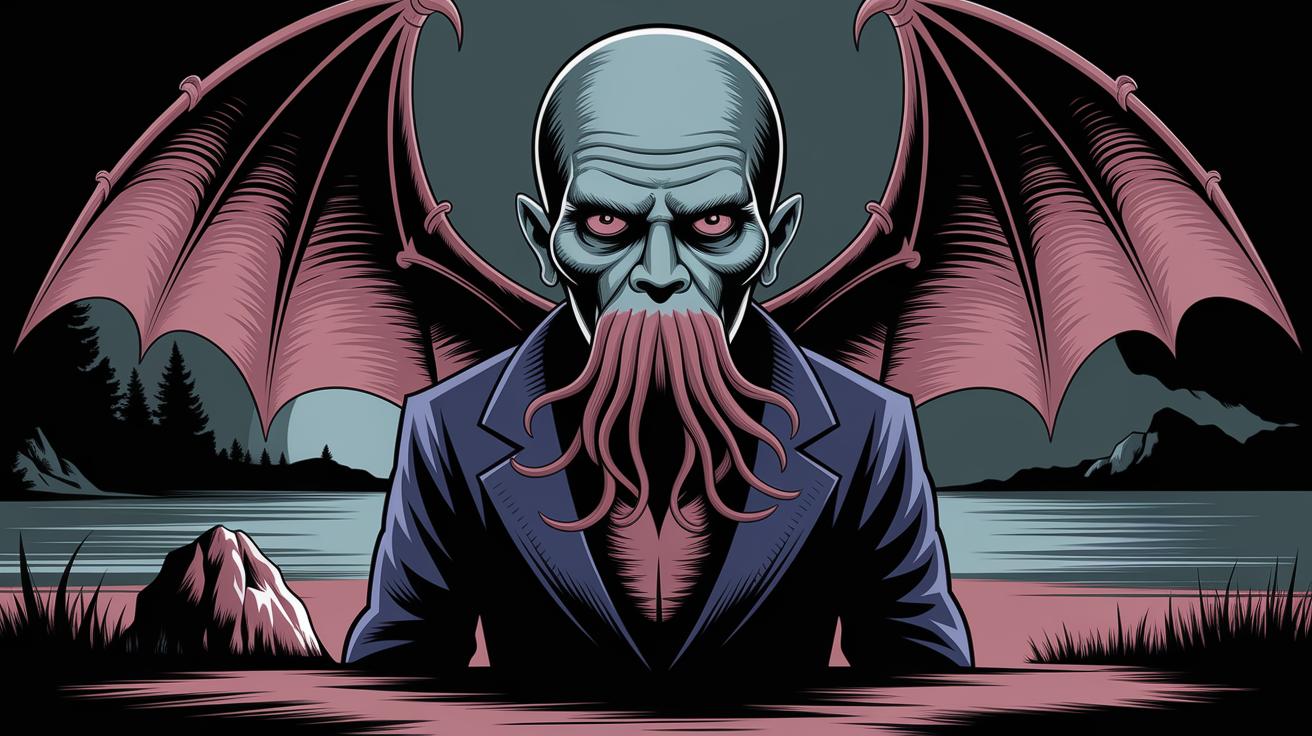
Within the Cthulhu Mythos, Lovecraft introduces entities known as the “Great Old Ones,” a pantheon of ancient, powerful beings that once reigned supreme on Earth. Among these, Cthulhu stands out as the most iconic—a monolithic creature that lies dormant beneath the Pacific Ocean in the sunken city of R’lyeh. Described as a monstrous hybrid of an octopus, a dragon, and a human caricature, Cthulhu epitomizes the unfathomable horror that Lovecraft sought to convey. Beyond Cthulhu, Lovecraft crafted a hierarchy of otherworldly beings, including the Elder Things, Nyarlathotep, and Azathoth, expanding the mythos’ complexity and depth.
The tales of these entities reflect Lovecraft’s fascination with the concept of beings beyond human understanding. The mythos blurs the line between science fiction and horror, envisioning a universe where humans are mere pawns, oblivious to the greater cosmic forces at play. Lovecraft’s portrayal of these beings draws on existential themes, suggesting that humanity’s quest for knowledge could lead to its undoing. Such narratives highlight the cosmic indifference of the universe—a theme that resonates with readers, fostering a sense of unease and humility in the face of the unknown.
Some of the Monsters & the Stories
Lovecraft’s stories are populated with an array of terrifying creatures that embody the unknown, each contributing to the Cthulhu Mythos in different ways. “The Call of Cthulhu,” perhaps Lovecraft’s most famous story, introduces readers to Cthulhu himself and the cults devoted to his worship. This tale captures the essence of Lovecraft’s horror, blending mystery, ancient lore, and the revelation of cosmic horrors lying in wait to awaken.
Other notable stories include “At the Mountains of Madness,” which introduces readers to the Elder Ones in a chilling Antarctic expedition tale, and “The Shadow over Innsmouth,” where a coastal town is haunted by Deep Ones—hybrid creatures born from human and aquatic deity progeny. Each story contributes a unique element to the mythos, expanding its scope and demonstrating Lovecraft’s genius in crafting horror tales that transcend mere fear, delving into existential dread.
The Cthulhu Mythos in Popular Culture
The influence of the Cthulhu Mythos extends far beyond Lovecraft’s original writings, permeating popular culture in surprising and enduring ways. From literature to film, games to music, Lovecraft’s creations have inspired and terrified audiences for generations. Novels and stories by authors like Stephen King, Neil Gaiman, and Brian Lumley have drawn inspiration from the Mythos, incorporating its themes and entities into their own works.
In the realm of visual media, films such as “The Thing” and “Alien” bear the hallmark of Lovecraftian horror, while video games like “Bloodborne” and “Call of Cthulhu” offer immersive experiences into the mythos’ unsettling world. Musicians, too, have paid homage, with bands like Metallica and H.P. Lovecraft (the band) drawing on the mythos for lyrical inspiration. The adaptability and resilience of Lovecraft’s universe underscore its status as a cultural touchstone, continuing to engage and captivate creators and audiences alike.
Next Steps
| Section | Summary |
|---|---|
| The Cthulhu Mythos | Explore the interconnected universe Lovecraft crafted, characterized by cosmic horror and shared storytelling. |
| STAR SPAWN AND ELDER ONE | Detail Lovecraft’s pantheon of alien gods and the existential themes they embody in the Mythos. |
| Some of the Monsters & the Stories | Highlight key stories and creatures within the Mythos, exemplifying Lovecraft’s unique brand of horror. |
| The Cthulhu Mythos in Popular Culture | Examine the enduring impact of the Mythos across various media, influencing countless creators and works. |