
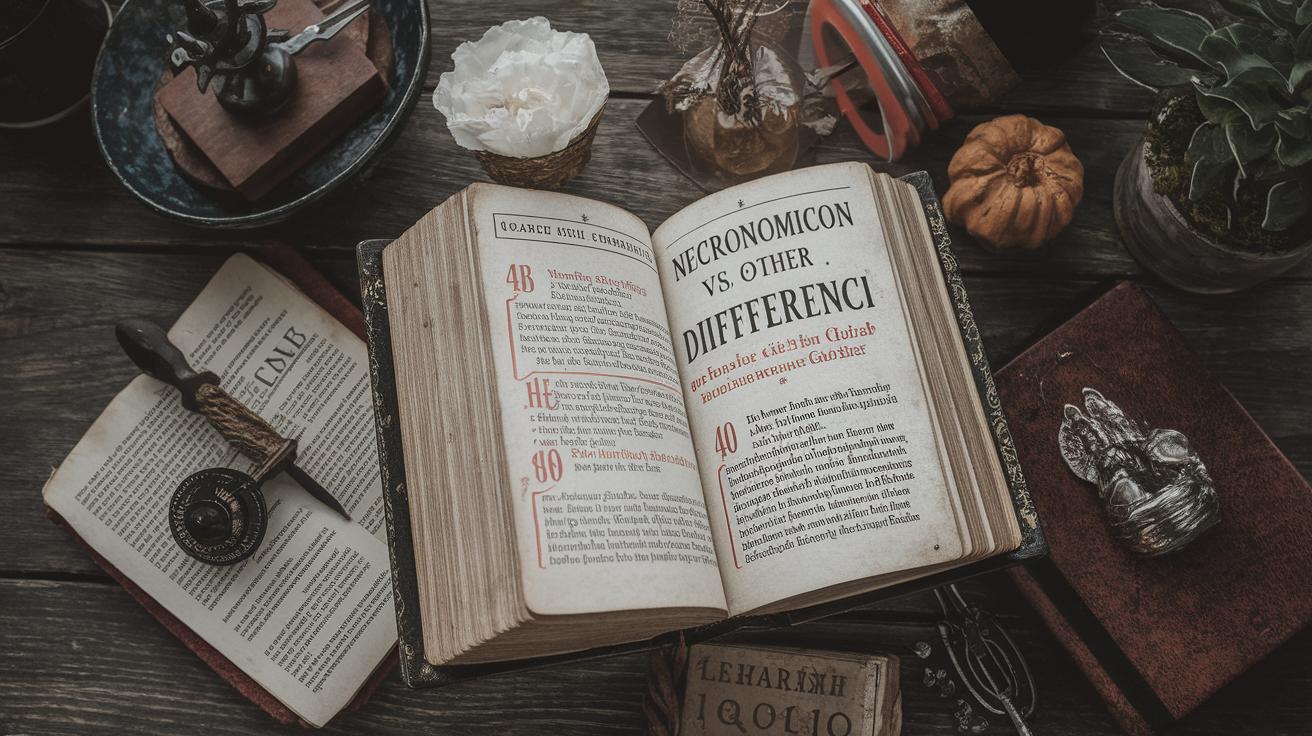
Necronomicon vs Other Grimoires: Key Differences
The world of grimoires is as vast as it is mysterious, with each book offering a unique window into the realms of magic and the occult. In this post, we delve into the enigmatic Necronomicon and its distinct characteristics compared to other famous grimoires. By exploring the underlying themes, the creators behind these works, and the paths they purport to chart, we can better understand their ongoing mystique and influence. As we journey through these arcane tomes, we uncover the differences in their origins, purposes, and the esoteric truths they claim to reveal. Join us as we venture through the shadows and emerge with a deeper appreciation for these legendary books of magic.
Between the Lines
The Necronomicon, attributed to the fictional “Mad Arab” Abdul Alhazred, differs from other grimoires in its origins and intentions. While it is often considered an invented text by H.P. Lovecraft, its fictional status does not diminish its popularity or the air of mystery surrounding it. Unlike traditional grimoires that offer structured rituals and spells, the Necronomicon purportedly contains forbidden knowledge about eldritch beings and otherworldly forces, blurring the lines between fiction and forbidden truths.
Conversely, other grimoires like the “Key of Solomon” or the “Picatrix” have roots in historical contexts, dating back centuries and providing detailed instructions for magical practices. These texts offer a more systematic approach to the mystical arts, focusing on summoning spirits, divination, and protection. The stark contrast in purpose, with the Necronomicon shrouded in fictional horror and other grimoires grounded in practical magic, highlights the differences in their narrative intent and literary construction.
Mystic Men
The creators behind these arcane texts also play a crucial role in defining their place within the mythos of magical literature. While H.P. Lovecraft’s Necronomicon serves as a compelling construct within his larger universe, it is the product of modern fiction rather than ancient lore. Lovecraft cleverly used this fictional grimoire to expand his storytelling, providing a chilling element to his dark tales, much unlike the authors of other grimoires who were often scholars or mystics of their time.
Real grimoires have historically been attributed to figures like King Solomon or Hermes Trismegistus, reflecting a blend of myth, legend, and historical speculation. These figures, whether real or mythologized, lend their reputations and wisdom to the works, imbuing them with a sense of authenticity and time-honored efficacy. This distinction between the Necronomicon’s fictional ancestry and the genuine endeavors behind other grimoires contributes to their differing roles and receptions within esoteric communities.
Path of Shadows
The journeys proposed by these texts also vary significantly, with the Necronomicon often portrayed as a path to madness and peril, reflective of Lovecraft’s thematic leanings. Its narrative emphasizes the futility of human understanding when faced with cosmic horrors, a stark contrast to the empowerment and enlightenment offered by other grimoires. Traditional grimoires act as guides through the esoteric arts, seeking to provide the practitioner with tools to navigate and manipulate unseen forces, carving their own path within this shadowy realm.
The Necronomicon’s chaotic, fear-inducing narrative subverts the usual grimoire motif of wisdom and power, instead offering a cautionary tale of the dangers in seeking forbidden knowledge. This divergent path underscores the creative brilliance of Lovecraft, simultaneously positioning his creation within and apart from the established lore of magical texts. In doing so, it serves as a compelling fiction-oriented entry point into the broader conversation about magic and the unknown.
The End Is Near
The enduring fascination with the Necronomicon and other grimoires lies in their ability to inspire both awe and dread, bridging the gap between reality and the imagined. As fictional as the Necronomicon may be, its influence echoes through the halls of literature and modern occultism, sparking debates about the nature of reality, fiction, and the power of storytelling. The thematic dichotomy it presents against more traditional grimoires continues to captivate and challenge perceptions.
In future prospects, these texts—fictional or historical—will likely persist as objects of study and admiration. They serve as reminders that the human desire to explore, understand, and perhaps control the unknown is as strong today as it ever was. By appreciating the contrasts and complementarities between the Necronomicon and other grimoires, we gain insights not only into the evolution of magical lore but also into the timeless power of narrative to shape human thought and culture.
| Aspect | Necronomicon | Other Grimoires |
|---|---|---|
| Origin | Fictional, created by H.P. Lovecraft | Historical roots, often ancient |
| Purpose | Forbidden knowledge, horror narrative | Practical magic, systematic rituals |
| Creators | H.P. Lovecraft (Modern fiction) | Historical figures (Scholars, mystics) |
| Path | Madness, peril, cosmic horror | Empowerment, enlightenment |