
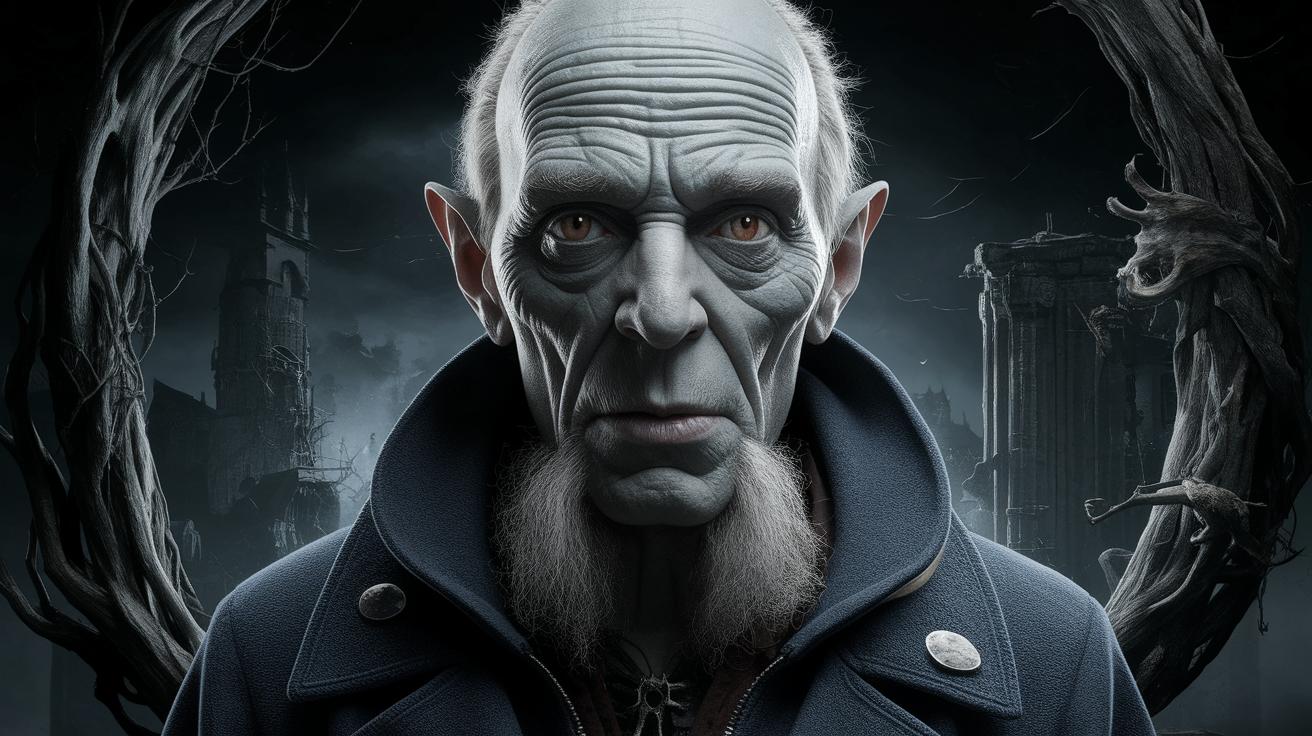
The Great Old Ones in Lovecraft’s Works
In the eerie and enigmatic universe created by H.P. Lovecraft, the Great Old Ones stand as ancient and powerful cosmic entities that challenge our understanding of reality and our place within it. This article delves into five of Lovecraft’s most compelling and terrifying Great Old Ones: Cthulhu, the tentacled behemoth; Hastur, The King in Yellow, shrouded in mystery; Cthylla, the lesser-known daughter of Cthulhu; Azathoth, the monstrous Demon Sultan; and Nyarlathotep, the enigmatic Crawling Chaos. We will explore their mythic origins, their chilling roles in Lovecraft’s mythos, and their enduring influence on popular culture. Together, these entities exemplify Lovecraft’s unique ability to evoke cosmic horror and question humanity’s insignificance in the face of unfathomable power.
Post navigation
To navigate through this chilling exploration of Lovecraft’s Great Old Ones, use the following guide:
-
Cthulhu
-
Hastur, The King in Yellow
-
Cthylla
-
Azathoth, The Demon Sultan
-
Nyarlathotep, The Crawling Chaos
-
Yog-Sothoth, The Key and The Gate
Cthulhu:
Arguably the most iconic of Lovecraft’s Great Old Ones, Cthulhu is depicted as a monstrous cosmic entity with an octopus-like head, enveloped in aquatic darkness. First introduced in the short story “The Call of Cthulhu,” this ancient being lies dormant beneath the Pacific Ocean in the sunken city of R’lyeh. The imagery of writhing tentacles and the sense of ancient power encapsulate the essence of cosmic horror, where humans are but insignificant dots in a vast, indifferent universe.
Cthulhu’s influence extends far beyond its slumber, affecting the dreams of sensitive individuals and inciting madness. Its “cultists” work tirelessly to awaken their master, believing that doing so would bring about a new age of chaos and destruction. This narrative has woven itself into pop culture, influencing everything from literature and films to board games and music, cementing Cthulhu as a symbol of Lovecraftian horror and our fear of the unknown.
Hastur, The King in Yellow:
Less directly detailed by Lovecraft himself and more developed by his literary successors, Hastur is often associated with the yellow sign and the haunting play “The King in Yellow.” The myths surrounding Hastur suggests a deity of decay and madness, whose influence sews chaos and despair. The character creates an atmosphere of creeping dread and psychological terror, presenting an existential threat not through physical presence, but through the corruption of reality itself.
The ambiguity surrounding Hastur serves to amplify its horror. Often depicted as residing in the remote Lake of Hali, Hastur’s presence questions the very fabric of sanity, leaving characters unsettled and uncertain of their reality. This aspect of existential horror aligns perfectly with Lovecraft’s themes, challenging characters—and readers—to confront their insignificance and vulnerability in the face of cosmic dread.
Cthylla:
As the hidden offspring of Cthulhu and a lesser-known entity in Lovecraft’s mythos, Cthylla represents a continuation of the horrific lineage that threatens cosmic balance. Introduced later by other writers expanding the Lovecraftian universe, Cthylla is theorized to ensure the survival and resurgence of Cthulhu’s species. Though not as widely explored in primary texts, Cthylla contributes to the ongoing mythology, her presence symbolizing the cyclical nature of terror.
Described often as having a monstrous appearance akin to her progenitor, Cthylla embodies the perpetual terror of resurgence and the inevitable rise of primordial evil. Her narrative underscores the themes of inevitability and despair pervasive in Lovecraft’s universe, suggesting a future where ancient horrors may reawaken and reclaim their dominance over the world.
Azathoth, The Demon Sultan:
At the heart of Lovecraft’s multiverse lies Azathoth, a terrifying and mindless cosmic entity often referred to as the ‘Nuclear Chaos’ or ‘Blind Idiot God.’ This chaotic being is said to reside at the center of the universe, surrounded by a horde of shapeless, monstrous servitors playing maddening music to keep it in a state of ignorance and apathy. Azathoth’s existence raises fundamental questions about the nature of the universe, with its chaotic whims influencing reality itself.
As an embodiment of total chaos and entropy, Azathoth dismisses the comforting notion of order and purpose in the universe. The idea of a universe governed by an insensible force terrifies the rational mind, propelling Lovecraft’s horror beyond mere terror and into philosophical realms. The specter of a universe wherein humanity is at the mercy of an oblivious cosmic Sultan renders all human endeavor ultimately futile.
Nyarlathotep, The Crawling Chaos:
Nyarlathotep, another pivotal figure in Lovecraft’s pantheon, contrasts with the other Great Old Ones through its calculated malice and direct interaction with humanity. Known as the Crawling Chaos, Nyarlathotep can take innumerable forms, and often chooses to walk among mortals, causing disruption and chaos. Unlike its brethren who exist in aloofness or mindlessness, Nyarlathotep’s engagement is personal and malicious.
This shapeshifting entity serves as a messenger and instigator, often spreading insanity and discord. Nyarlathotep’s capriciousness instills an acute anxiety, as its motivations are indecipherable and its actions unpredictable. It embodies Lovecraft’s theme of the unpredictable and incomprehensible nature of the universe, encouraging a sense of dread about the unknown and the unknowable that exists beyond the veil of normality.
Yog-Sothoth, The Key and The Gate:
Renowned for its dual nature, Yog-Sothoth represents the concept of all-knowing eternity and the potential for omnipresence across time and space. Often described as ‘Beyond-One’ and ‘All-in-One’, this Great Old One has a transcendental quality that seems to bridge the gap between different planes of reality. Its existence ties directly into Lovecraft’s narrative of cosmic horror, suggesting a universe where temporal and spatial limitations have no bearing.
In stories like “The Dunwich Horror,” Yog-Sothoth is called upon by those seeking forbidden knowledge and power, often with catastrophic consequences. The tangible risk of interaction with such beings starkly illustrates Lovecraft’s warning about humanity’s hubris in attempting to transcend its natural limitations. Yog-Sothoth’s role is a reminder of the incomprehensible mysteries that lie beyond our reach, observing human folly from an impassive and incomprehensible distance.
Discover more from The Lovecraft eZine
If this exploration of the Great Old Ones has piqued your interest in Lovecraft’s complex cosmos, consider diving deeper into the world of eldritch horror. The Lovecraft eZine offers a wealth of resources, including articles, discussions, and community events, all dedicated to unraveling the strange worlds and chilling narratives born from Lovecraft’s imagination.
Summary of main points
| Great Old One | Description | Themes |
|---|---|---|
| Cthulhu | Monstrous entity beneath the Pacific, evokes cosmic horror. | Dream influence, madness, insignificance of humanity. |
| Hastur | Associated with “The King in Yellow”, embodies decay and madness. | Psychological terror, corruption of reality, existential dread. |
| Cthylla | Daughter of Cthulhu, ensures species’ survival. | Inevitability, cyclical terror. |
| Azathoth | Mindless deity, center of chaos in the universe. | Existential horror, futility, chaotic nature of the universe. |
| Nyarlathotep | Shapeshifting instigator of chaos among humanity. | Malicious engagement, unpredictability, personal horror. |
| Yog-Sothoth | The all-knowing, existing beyond the realm of space and time. | Forbidden knowledge, human hubris, transcendental horror. |