
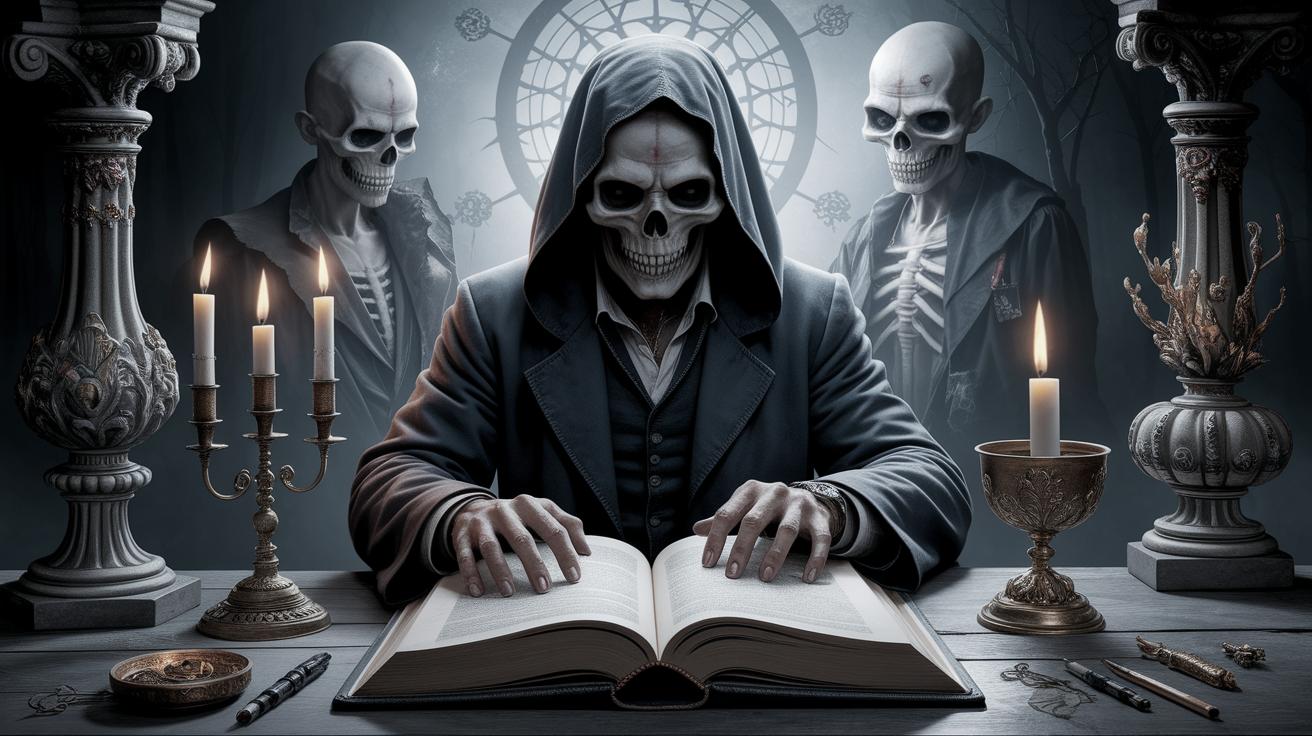
Necronomicon: Spells and Rituals – Fact or Fantasy?
The enigmatic “Necronomicon” has long captured the imaginations of those fascinated by the arcane and the forbidden. Often perceived as an ancient book of shadows, it’s reputed to contain powerful spells, eerie rituals, and dark secrets capable of summoning unfathomable forces. While skeptics dismiss it as pure fantasy, others ardently believe in its hidden truths. This blog post delves into the origins of the “Necronomicon,” its dubious authenticity, and the cultural influence it wields in contemporary occult practices. We’ll also explore recommended readings for those curious about the book’s legendary mystique, discuss the relationship between the “Necronomicon” and organizations like the Church of Satan, and address common questions about its supposed influence. Finally, we’ll offer additional resources for further exploration of this captivating subject.
Suggested Reading
The allure of the “Necronomicon” extends beyond mere folklore, with numerous publications claiming to hold its dark secrets. “The History of the Necronomicon” by H.P. Lovecraft is a foundational text for understanding the cultural backdrop of this mythical book. Lovecraft, renowned for his Cthulhu mythos, created the Necronomicon as a fictional artifact, a narrative device designed to enliven his horror stories. Yet, its fictional roots haven’t deterred readers and authors from expanding on its mythology.
Another cornerstone topic is the “Simon Necronomicon,” a controversial volume published in 1977. This iteration of the book, compiled by ‘Simon,’ has achieved significant commercial success. While some hail it as a faithful reconstruction of Sumerian and Babylonian mythology, others deride it as an elaborate hoax. Regardless of its veracity, its impact on popularizing the idea of the Necronomicon is undeniable. For academic insights, Daniel Harms’s “The Necronomicon Files” offers a comprehensive history and critique of various versions and their alleged origins.
SUPPORT THE CHURCH OF SATAN!
The Church of Satan, established by Anton LaVey in 1966, often attracts curiosity about its relationship with esoteric texts like the Necronomicon. While the church doesn’t officially recognize the book as a spiritual or religious text, members interested in the broader realm of occultism might encounter references to the Necronomicon in exploratory pursuits. It’s important to recognize the distinction between the theatrical narrative of the book and the philosophical foundations laid out by LaVey, which emphasize individualism and rational self-interest.
The Church’s stance on the Necronomicon often mirrors its broader approach to mythological and fictional elements. Embracing the symbolic power of myth, rather than a literal belief in supernatural phenomena, the Church advocates for an understanding of such texts as metaphorical rather than doctrinal. For practitioners of Satanism, books like the Necronomicon serve as creative tools for ritualistic expression rather than binding scripts for spiritual practice.
MORE FROM MAGUS PETER H. GILMORE
Magus Peter H. Gilmore, High Priest of the Church of Satan, offers nuanced perspectives on the utility of texts like the Necronomicon. In his writings, Gilmore often addresses the importance of symbolism and personal meaning in rituals rather than adherence to any prescribed set of beliefs. He emphasizes the potency of imagination and creativity in crafting one’s own ritualistic experiences, using fictional resources as fodder for personal exploration.
Gilmore’s works foster an appreciation for the cultural value of myth and fiction in influencing personal identity and worldview. In addressing queries about the Necronomicon, Gilmore might advocate for a rational exploration of its themes and relevance, encouraging practitioners to discern which elements resonate personally while discarding any that do not align with their individual values and beliefs.
Necronomicon FAQ
Many people have questions about the authenticity of the Necronomicon and its place in the world of the occult. Frequently, the first question asked is whether the original Necronomicon ever existed. According to the scholarly consensus, it originated as a fictional creation by H.P. Lovecraft. Despite internet rumors and sensationalist claims, no historical evidence supports its existence as a genuine ancient text.
Another common inquiry centers on the potential for Necronomicon spells to manifest real-world results. For believers in the supernatural, it’s less about the literal outcomes and more about the psychological and emotional impact of rituals derived from or inspired by the book. While there are no empirical data to substantiate the efficacy of these spells, their subjective power often lies in the symbolic meaning and ritualistic focus they provide to practitioners.
Related HowStuffWorks Articles
If you seek to further your understanding of the Necronomicon beyond this discussion, several HowStuffWorks articles delve into related subjects. Articles exploring the origins of H.P. Lovecraft’s oeuvre and its lasting impact on horror and speculative fiction will provide greater context and appreciation for the Cthulhu mythos. Such articles dissect the thematic elements Lovecraft employed, unraveling the complex interdependencies in his imagined universe.
Besides Lovecraft, exploring articles about the nature of mythical texts and their place in contemporary culture will elucidate why the Necronomicon remains a fascinating object of discourse. Understanding how society shapes its legends and the narratives that define movements allows for a deeper comprehension of how the Necronomicon has transcended its fictional moorings to become a staple in occult discussions.
More Great Links
For those passionately drawn to the mystique of the Necronomicon, there is a wealth of online resources that offer elaborate analyses and creative interpretations. Websites dedicated to Lovecraftian horror often host forums and discussions for enthusiasts to share insights, fan theories, and personal experiences related to the Necronomicon.
Online libraries and digital archives are treasure troves of rare essays, fan fiction, and adaptations. These platforms offer access to intricate discourses among scholars and fans alike, facilitating a bustling community ever eager to dissect and expand upon the legend of the Necronomicon. With a commitment to staying informed and grounded in both fact and imaginative interpretation, such resources present an expansive, supportive landscape for the curious mind.
Lessons Learned
| Section | Summary |
|---|---|
| Suggested Reading | Explores foundational texts and analyzes varying interpretations of the Necronomicon’s origins and impact. |
| SUPPORT THE CHURCH OF SATAN! | Discusses the Church of Satan’s views on the Necronomicon and its role as a symbolic, rather than literal, tool for personal expression. |
| MORE FROM MAGUS PETER H. GILMORE | Highlights Gilmore’s thoughts on the symbolic power of myth and fiction in rituals, stressing personal adaptation over doctrinal adherence. |
| Necronomicon FAQ | Addresses common questions regarding the authenticity and practical efficacy of the Necronomicon’s spells and rituals. |
| Related HowStuffWorks Articles | Suggests related articles that provide context and deeper insight into Lovecraft’s work and the enduring fascination with mythical texts. |
| More Great Links | Lists online resources and communities dedicated to the exploration and discussion of the Necronomicon and Lovecraftian horror. |